 Enter The Gungeon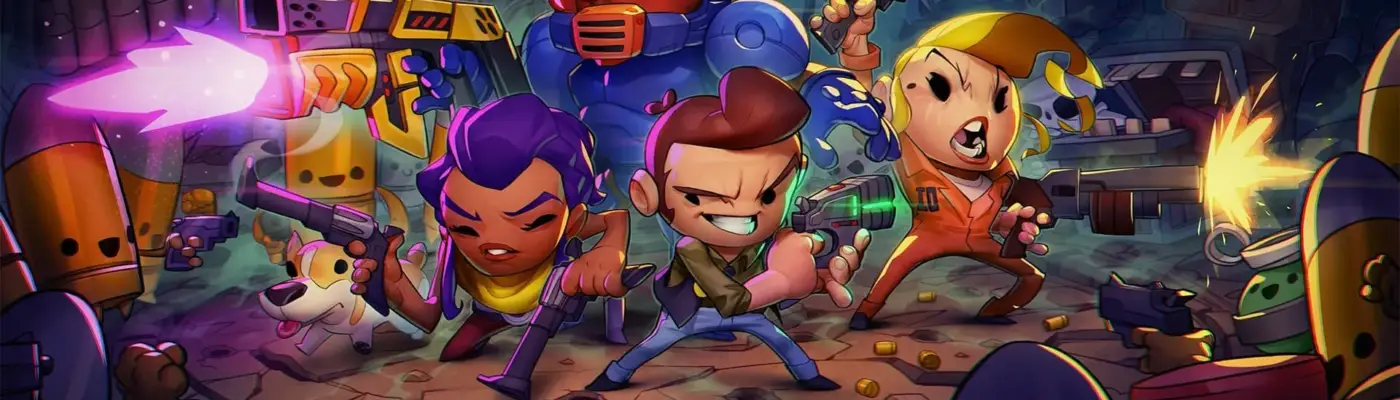
Enter The Gungeon
5 Mods 2 Tools 0 Articles 233 Downloads
Enter The Gungeon is one of those rare action games that feels instantly overwhelming, deeply funny, and strangely elegant all at once. At first glance, it looks like a fast-paced indie shooter built around retro visuals, randomized dungeon runs, and a mountain of bullets. That much is true, but it does not fully explain why Enter The Gungeon has remained so memorable for so many players. The game takes the structure of a roguelike dungeon crawler and fuses it with twin-stick shooting, bullet hell intensity, inventive weapon design, secret-filled progression, and a playful obsession with gun-themed absurdity. Every run through Enter The Gungeon becomes a balancing act between panic and control, luck and skill, experimentation and survival. For players who enjoy action games with tight combat, responsive movement, replay value, unpredictable loot, boss fights, unlockable characters, and a steep but satisfying mastery curve, Enter The Gungeon continues to stand out as one of the most entertaining examples of the genre.
What Enter The Gungeon Is
At its core, Enter The Gungeon is a roguelike action game built around short-to-medium runs through a dangerous, ever-changing dungeon. You choose a character, descend floor by floor, fight through rooms packed with enemies, collect weapons and items, and try to stay alive long enough to face increasingly brutal bosses. That structure sounds familiar now because so many games have followed similar ideas, but Enter The Gungeon gives the format a distinct personality. It is louder, stranger, and more playful than many of its genre peers. It wants to challenge you, but it also wants to make you smile while it does it.
Chaos With Precision
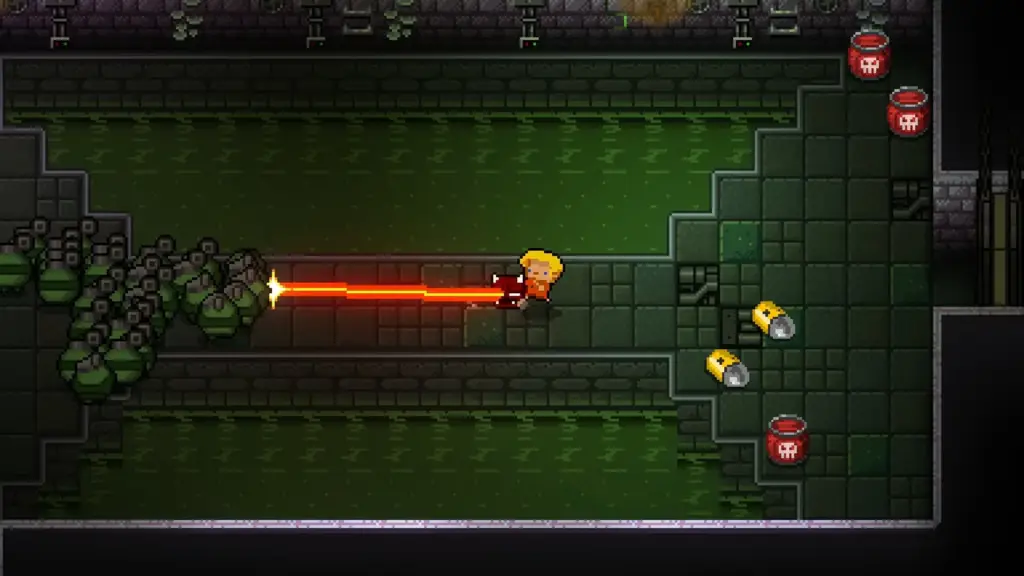
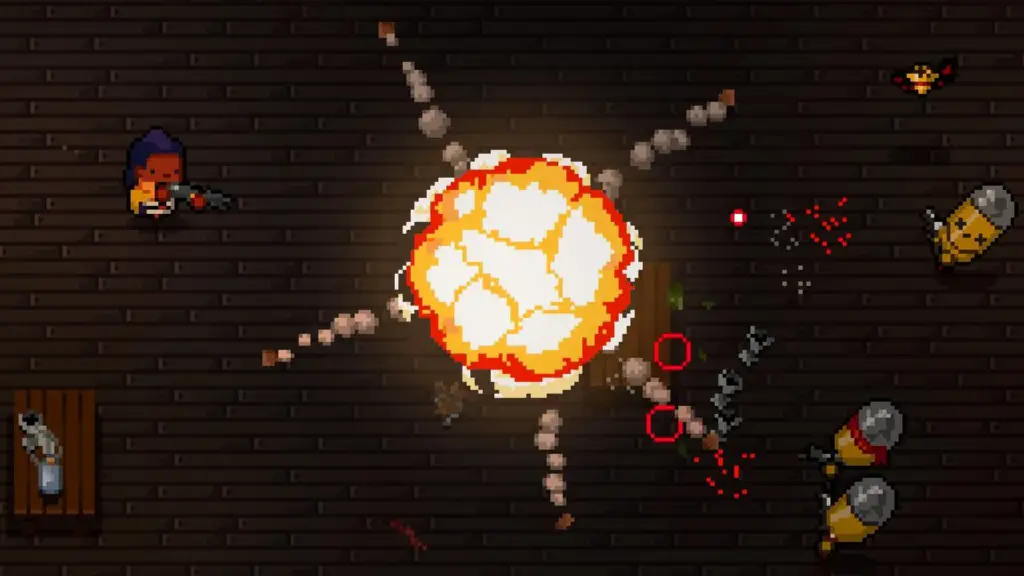
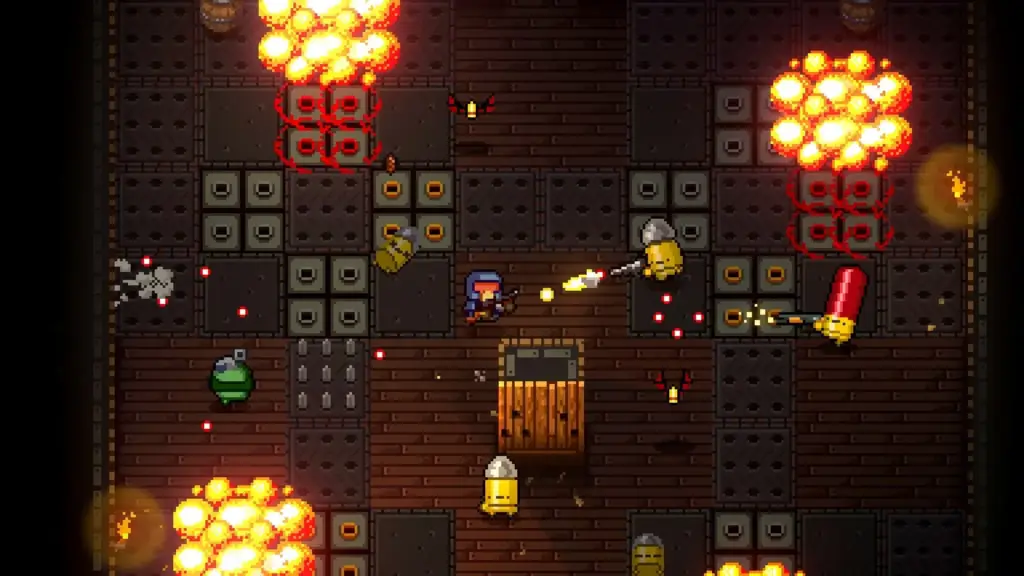
The first thing most players notice is the sheer volume of projectiles on screen. Bullets arc, spread, bounce, spiral, and flood rooms in patterns that can feel impossible when you are new. Yet beneath that chaos is a combat system built on precision.
Movement matters as much as shooting. Sometimes more. Knowing when to dodge roll, when to stay still, when to weave between projectiles, and when to clear space with a blank becomes the real language of the game. Enter The Gungeon is not just about attacking quickly. It is about reading danger in motion.
That is why the game feels so satisfying once it clicks. Surviving a brutal room without getting hit can feel almost rhythmic, like solving a problem at full speed.
The Weapons Are Half The Magic
A lesser game could have relied purely on difficulty, but Enter The Gungeon becomes truly memorable because of its weapon design. The arsenal is ridiculous in the best way. You are not just picking up stronger guns. You are finding bizarre, creative, often hilarious tools that completely change the feel of a run. Some weapons are powerful, some awkward, some unexpectedly brilliant. Many are built around jokes, references, or visual gags, but the humor never gets in the way of functionality. If anything, it makes experimentation more exciting. This is one of the game’s greatest strengths. Every chest carries possibility. You may open it and find the exact weapon you needed, or something so strange that you have no idea whether it will save your run or ruin it. Both outcomes are fun.
A Dungeon That Rewards Curiosity
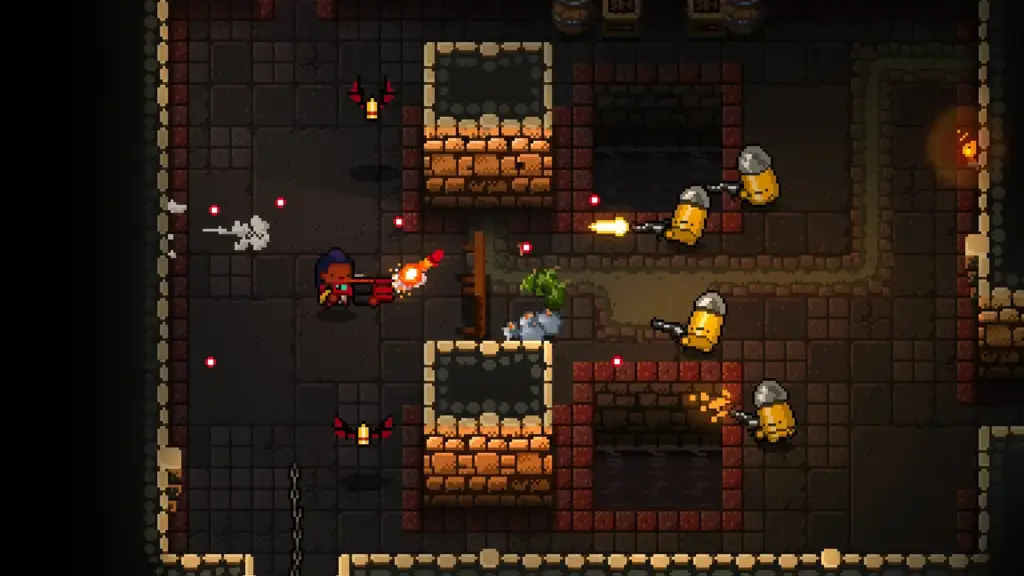
Part of the long-term appeal of Enter The Gungeon is how much it hides from the player. It is not content to be just a sequence of combat rooms and boss encounters. The dungeon is full of secrets, unlocks, hidden mechanics, alternate paths, and small discoveries that gradually expand your understanding of the game. That sense of mystery keeps the experience lively. Even after dozens of runs, it still feels like there might be something you have missed, a system you have not fully explored, or a character interaction that leads somewhere unexpected.
Games like this thrive on discovery, and Enter The Gungeon understands that well. It constantly gives players reasons to look a little closer.
Difficulty That Demands Respect
This is not an easy game, especially in the beginning. Enter The Gungeon can be punishing, and it makes very few apologies for that. Early runs often end quickly. Bosses can feel overwhelming. Mistakes are costly, and panic usually makes things worse.
Still, the difficulty rarely feels cheap. The game is demanding, but it is readable. Patterns can be learned. Timing can improve. Decision-making gets sharper with repetition. You start noticing which enemies need to go first, which rooms are more dangerous than they initially appear, and when conserving resources matters more than immediate aggression. That learning curve gives the game durability. Progress is not only measured in unlocks. It is measured in composure.
Characters, Runs, And Replay Value
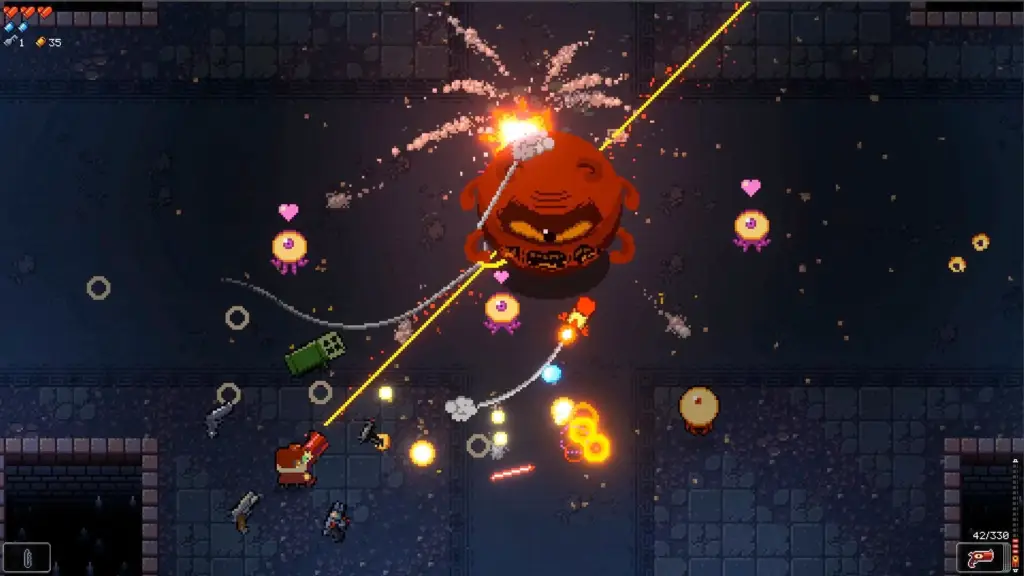
The playable characters each bring their own flavor to the experience, and that helps keep repeated runs from feeling stale. Even when the core objective remains the same, the starting tools and subtle differences can push you toward new strategies.
The randomized structure also does a lot of heavy lifting. Because room layouts, item drops, weapon finds, and run momentum change constantly, Enter The Gungeon rarely settles into routine. Some runs feel blessed from the start. Others force you to improvise with weak gear and smart positioning. That unpredictability is a huge part of the hook.
And then there is the classic roguelike temptation, one more run. It is very easy to tell yourself you will stop after a quick attempt, then realize an hour disappeared.
Humor Without Losing Tension
A lot of games try to be funny. Fewer manage it without diluting their own stakes. Enter The Gungeon pulls that off remarkably well. Its world is built around gun puns, animated bullets, playful item descriptions, absurd enemies, and a general sense that everything has been designed with a grin. Yet when the room fills with hostile fire and your health is hanging by a thread, the tension is real. The comedy enhances the identity of the game, but it never weakens the action.
That balance gives Enter The Gungeon a special tone. It feels silly and intense at the same time, which is not easy to achieve.
Why The Combat Feels So Clean
One of the reasons players keep returning to Enter The Gungeon is simple, it feels good to control. Shooting is responsive. Dodging is sharp. Enemy attacks are visually legible enough to read under pressure, even when they are dense and threatening. That level of mechanical clarity matters in a game built on repeated failure and improvement. If movement felt slippery or collisions felt unfair, the whole experience would collapse. Instead, the game earns trust. When you fail, it usually feels like a mistake you can learn from, not a system fighting against you. That trust is essential in action-heavy roguelikes, and Enter The Gungeon has it.
Who Will Enjoy Enter The Gungeon Most
This is an easy game to recommend to players who enjoy fast combat, repeated runs, and skill-based progression. If you like twin-stick shooters, bullet hell games, roguelikes, or action titles that reward mechanical improvement, Enter The Gungeon has a lot to offer.
It is especially appealing for players who enjoy discovering synergies, unlocking hidden content, and gradually mastering a demanding system. On the other hand, if you strongly dislike repeated failure or high-pressure combat, it may feel exhausting rather than exciting.
Much depends on whether you find challenge motivating. If you do, the game has real staying power.
What Makes It Last
Years after release, Enter The Gungeon still feels easy to return to because its strengths are not tied to novelty alone. The controls remain excellent. The weapons remain inventive. The pacing still creates that familiar cycle of panic, adaptation, relief, and overconfidence.
Most importantly, each run creates stories. A near-disastrous boss fight, an unexpectedly perfect weapon combination, a miraculous recovery with one hit left, those moments are what give the game its personality in play. You do not just remember that you cleared a floor. You remember how chaotic it was, and how narrowly you escaped.
Latest Mods
View All → Enter The Gungeon 
 Enter The Gungeon
  Enter The Gungeon
  Enter The Gungeon
 Latest Tools
View All → Tool Enter The Gungeon
  Tool Enter The Gungeon